

Find the Right Shockwave Technology for Your Practice
Chattanooga® offers focused shockwave and radial pressure wave technologies designed for different treatment depths, clinical targets, and workflows. In one 15-minute consultation, a Chattanooga® specialist can help you compare the options and determine which technology best fits your patients and practice.
No obligation. Speak directly with a Chattanooga® specialist.
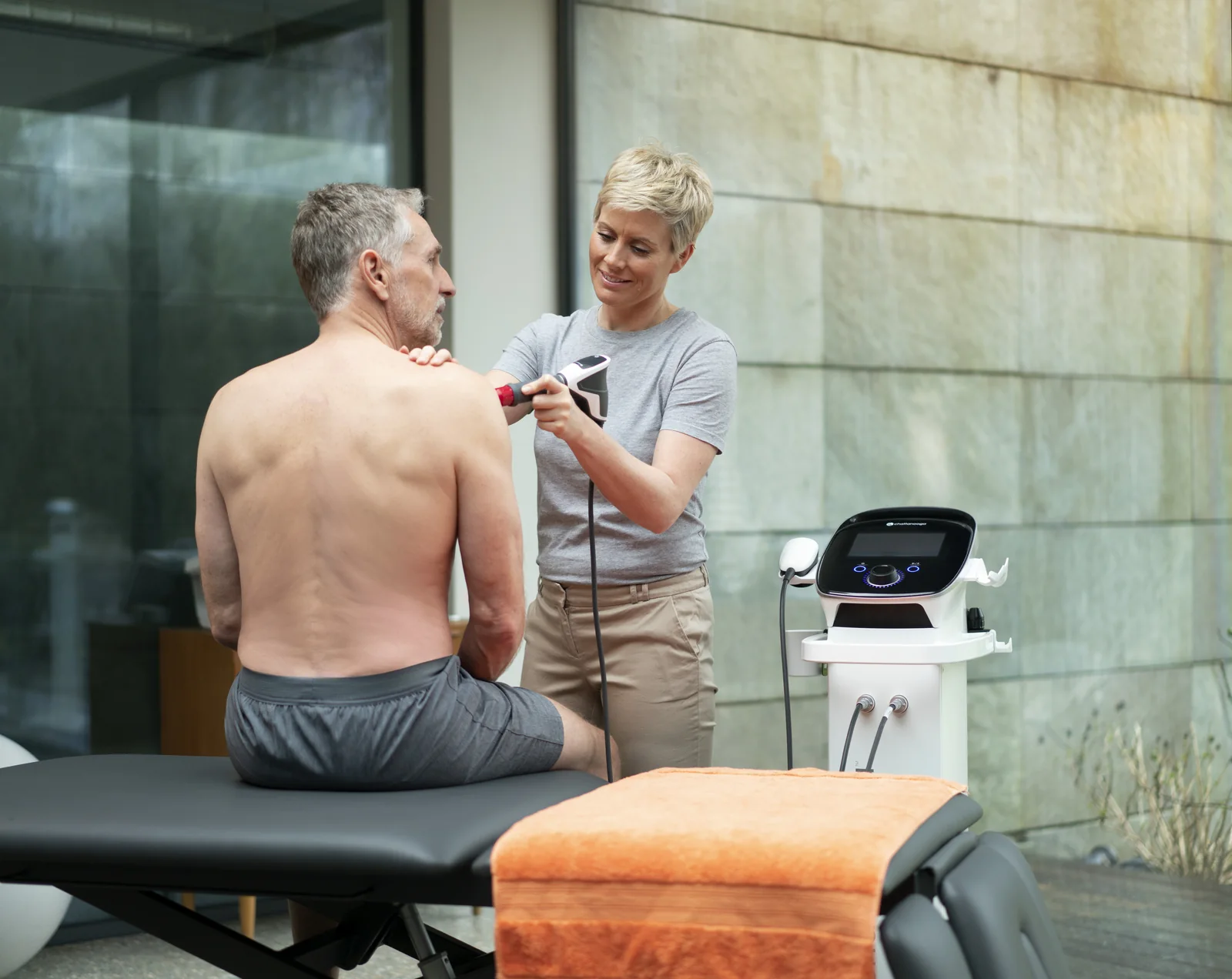
Two Shockwave Technologies.
Different Ways to Treat.
Focused shockwave and radial pressure wave deliver acoustic energy differently. The right fit depends on the treatment depth, clinical target, patient population, and workflow.
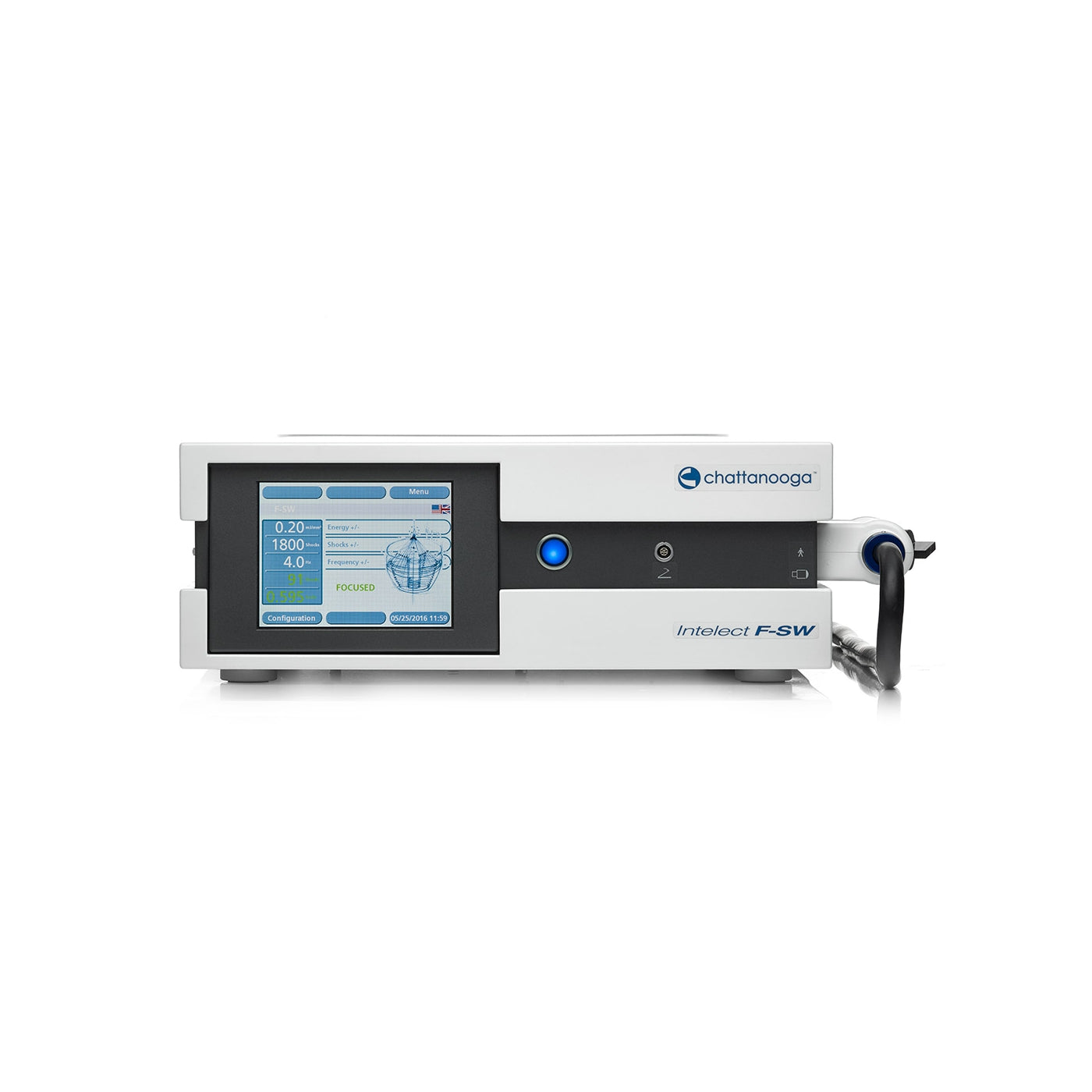
Focused Shockwave
Focused shockwave uses high-intensity acoustic waves to concentrate energy in a focal area at a selected depth for deeper or more precise targeting.
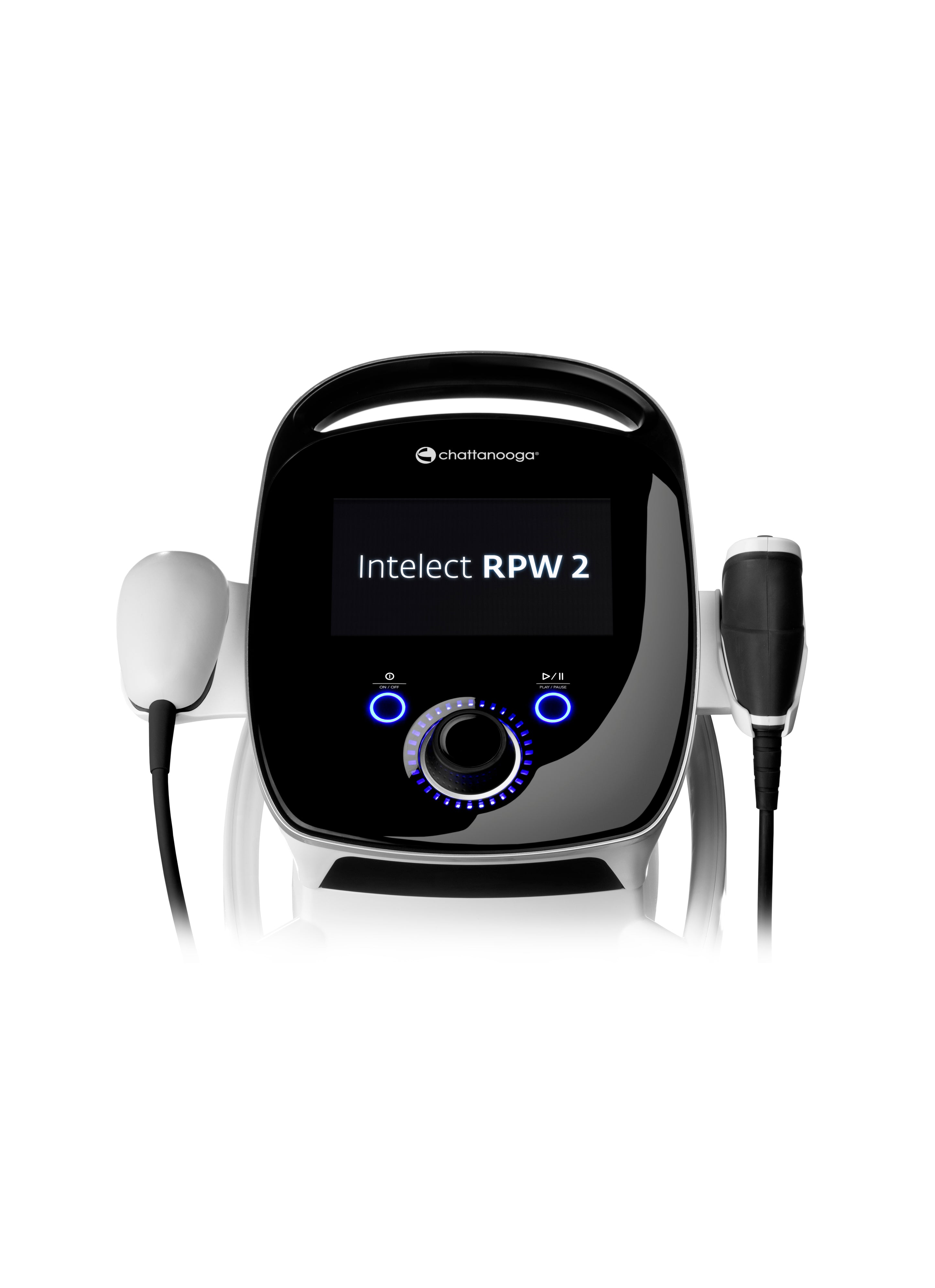
Radial Pressure Wave
Radial pressure wave uses divergent acoustic waves to distribute energy across a broader, more superficial treatment area. Mobile and non-mobile options are available.
Adding Shockwave Is Easier Than You Think
Compare Your Options
Tell us about your caseload, clinical goals, and workflow. A Chattanooga® specialist will help you compare focused shockwave and radial pressure wave.
See It in Your Clinic
Your regional Chattanooga® representative can bring the appropriate technology to your clinic for a hands-on demonstration with your team.
Start Treating with Confidence
On-site installation training and ongoing support help your team confidently incorporate the technology into its workflow.
Where Shockwave May Fit in Your Caseload
Shockwave therapy has been studied for a range of persistent tendon, fascia, and soft-tissue complaints. A Chattanooga® specialist can help you understand where focused shockwave or radial pressure wave may fit based on your patient mix and clinical goals.
Plantar Fasciitis 1
A frequently studied application of shockwave therapy for persistent plantar heel pain.
Tendinopathies 2-5
Shockwave has been studied in multiple conditions, including Achilles, patellar, elbow, and shoulder tendon complaints.
Myofascial Trigger Points 6
Radial pressure wave may be used across broader muscle and soft-tissue treatment areas.
Why Clinics Choose Chattanooga®
Choosing the right shockwave technology is only the beginning. You also need a partner you can trust to help your team use it successfully. From your first demo through installation, training, and ongoing service, Chattanooga® provides the guidance and support you need to move forward with confidence.
"Across the board, tendinopathies have improved very quickly with shockwave."Dr. Daniel Keller, PT, DPT
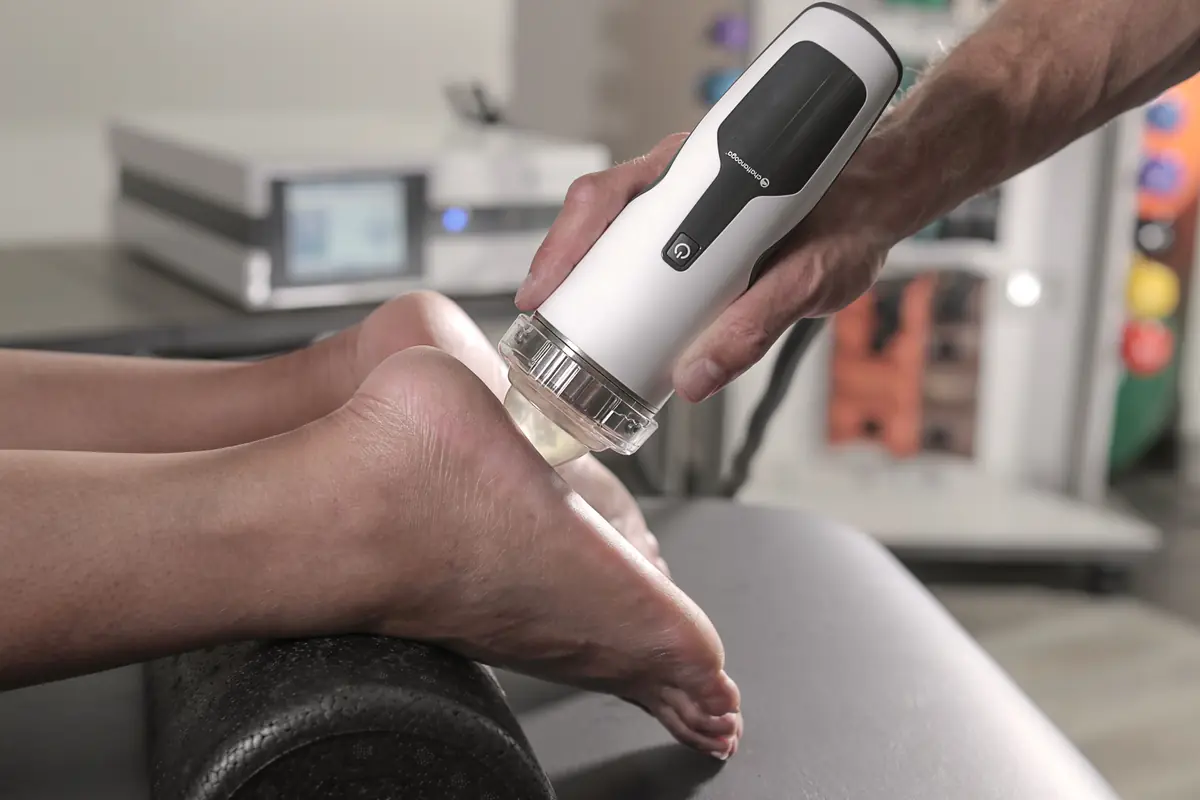
Request your 15-minute shockwave conversation
Tell us a little about your practice. A Chattanooga® specialist will reach out to find a time to connect. No obligation.
- ✓ Speak with a specialist knowledgeable in focused shockwave and radial pressure wave
- ✓ Discuss how each technology may fit your patient mix, workflow, and practice goals
- ✓ Explore pricing, financing, and optional in-clinic demonstration options
Your request has been received
A Chattanooga® specialist will review your information and contact you shortly.
View request confirmationRequest a 15-min conversation
Step {{ step }} of 2Please complete all three to continue.
Please add your name, valid email, phone, state, and ZIP.
By submitting you agree to be contacted about your consultation. We never sell your information.
Questions Clinics Ask About Shockwave
{{ f.a }}
References
1 Gollwitzer H, Saxena A, DiDomenico LA, et al. Clinically relevant effectiveness of focused extracorporeal shock wave therapy in the treatment of chronic plantar fasciitis: a randomized, controlled multicenter study. J Bone Joint Surg Am. 2015;97(9):701-708. doi:10.2106/JBJS.M.01331
2 Abdelkader NA, Helmy MNK, Fayaz NA, Saweeres ESB. Short- and Intermediate-Term Results of Extracorporeal Shockwave Therapy for Noninsertional Achilles Tendinopathy. Foot Ankle Int. 2021;42(6):788-797. doi:10.1177/1071100720982613
3 Furia JP, Rompe JD, Cacchio A, Del Buono A, Maffulli N. A single application of low-energy radial extracorporeal shock wave therapy is effective for the management of chronic patellar tendinopathy. Knee Surg Sports Traumatol Arthrosc. 2013;21(2):346-350. doi:10.1007/s00167-012-2057-8
4 Murat S, Dogruoz Karatekin B, Zengin M. Clinical and Sonographic Evaluation of the Effectiveness of Extracorporeal Shock Wave Therapy in Patients with Lateral Epicondylitis. Medeni Med J. 2024;39(2):109-116. doi:10.4274/MMJ.galenos.2024.60308
5 Duymaz T, Sindel D. Comparison of Radial Extracorporeal Shock Wave Therapy and Traditional Physiotherapy in Rotator Cuff Calcific Tendinitis Treatment. Arch Rheumatol. 2019;34(3):281-287. Published 2019 Jan 28. doi:10.5606/ArchRheumatol.2019.7081
6 Kartaloglu IF, Kus AA. Evaluation of Radial Extracorporeal Shock Wave Therapy on Treatment-Resistant Trigger Points Using Sonographic Shear Wave Elastography. J Coll Physicians Surg Pak. 2023;33(10):1159-1164. doi:10.29271/jcpsp.2023.10.1159