LightForce® laser therapy
LightForce laser systems deliver high-intensity laser therapy for clinical practices evaluating Class IV laser equipment. Use this path when laser workflow, model selection, and clinic implementation are the main questions.


Chattanooga® Rehab helps clinics evaluate high-intensity laser therapy, focused shockwave, and radial pressure wave equipment for conservative care workflows. The right modality depends on the patient population, treatment goals, space, and clinical team using it. Chattanooga Rehab is a rehabilitation equipment manufacturer serving professional clinics with LightForce laser and Intelect shockwave systems.
For licensed healthcare and rehabilitation professionals. Modalities should be used by qualified clinicians within the applicable product labeling and plan of care.
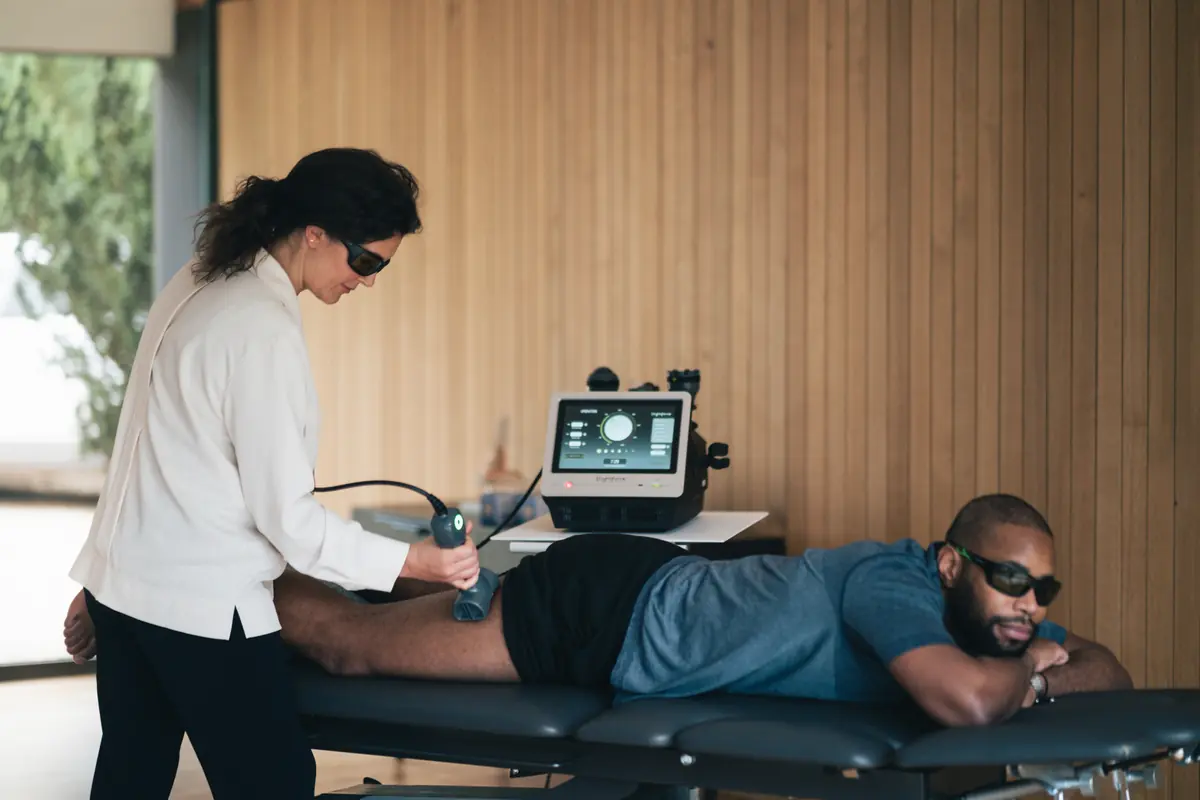
Advanced modalities should not be treated as interchangeable. Start with the clinical use case, then evaluate the technology, labeling, workflow, and support requirements.
LightForce laser systems deliver high-intensity laser therapy for clinical practices evaluating Class IV laser equipment. Use this path when laser workflow, model selection, and clinic implementation are the main questions.
Focused shockwave uses acoustic energy with focal-depth considerations. Review focused shockwave and radial pressure wave labeling separately.
LightForce systems, Class IV equipment, model comparisons, cost questions, and clinic implementation.
Shockwave equipment, focused vs radial, RPW guides, machine cost, and Chattanooga/Intelect category support.
Laser vs shockwave, choosing advanced equipment, and clinic workflow planning.
Equipment planning for professional clinics in the listed markets.
Arrange a demonstration for buyers comparing advanced rehabilitation modality options.
Arrange a demonstration for buyers evaluating LightForce laser therapy equipment.
Arrange a demonstration for buyers comparing focused shockwave and radial pressure wave equipment.
Compare modality categories, clinic workflow, and equipment implementation requirements.
Compare laser and shockwave equipment categories for your clinic.
Find practical equipment-buying guides on financing, compatible accessories, training, service, and clinic implementation.
Guide for clinics comparing quote scope, purchase structure, training, warranty, and implementation costs.
Guide for buyers asking about handpieces, transmitters, stand-offs, replacement parts, and service planning.
Guide for clinics asking about service path, warranty scope, training, and post-installation support.
Guide for buyers comparing used listings, accessory scope, service path, and supportability.
Find additional equipment guides for laser, shockwave, and clinic implementation questions.
Start with the proposed device's intended use and your clinic's patient population, then compare room controls, operator training, accessories, and service requirements. LightForce laser, focused shockwave, and radial pressure wave have different labeling. Match each option to clinician-directed conservative care rather than selecting by a broad claim that one modality is better. Review the exact US instructions before requesting a configuration-specific demonstration. [1] [2] [3]
Focused shockwave and radial pressure wave are separate equipment categories, not interchangeable names for the same purchase. Intelect® Focus Shockwave uses electromagnetically generated focused waves. Intelect® RPW 2 uses radial pressure wave technology. Ask which category is being quoted and review its own labeling, applicators, operating requirements, and training. Do not transfer a focused-device indication to a radial device or compare accessories as though they fit both systems. [2] [3]
Verify the exact model and its instructions, not just the Class IV description. Review intended use, operating controls, compatible treatment heads, protective eyewear, and the requirements for a laser treatment controlled area. The XLi/XPi manual addresses these separately from treatment settings. A safety classification does not establish which clinical results your patients will experience. Have the clinical lead and laser safety lead review the proposed configuration together. [1]
Compare the quoted console, handpiece, treatment heads or applicators, compatible accessories, and operating controls. Ask the representative to demonstrate the actual proposed configuration rather than a different model. The XLi/XPi manual describes interchangeable treatment heads, while Focus Shockwave and RPW documentation describe their own accessories. Record which items are included in the written quote and which require a separate purchase. Compatibility must be checked for the specific device. [1] [3] [4]
Ask for the exact device configuration and a separate list of included accessories, training, delivery, warranty, and any service agreement. Compare proposed items with the device documentation before approving the purchase. Laser treatment heads, radial transmitters, and focused-system accessories must be checked against their own systems. Mark optional items separately and ask who will complete installation and operator orientation. An itemized proposal is a verification tool, not evidence that every item is included. [1] [3] [4]
Request the current written financing offer, if one is available, rather than assuming a payment plan applies to your clinic. Ask about eligibility, payment schedule, total obligation, ownership at the end of the agreement, and any separate equipment or service charges. Compare those terms with the itemized equipment quote. These are purchasing questions, not a financing offer from Chattanooga Rehab or a promise that a modality will pay for itself.
Confirm device operation and safety training for every intended operator before clinical use. The XLi/XPi manual requires basic laser safety orientation and proficiency training. The Focus Shockwave manual calls for trained healthcare professionals and documented instruction covering operation, indications, contraindications, warnings, and functional checks. Ask who provides the training, how completion is recorded, and how new staff are trained. Do not assume a demonstration or purchase includes every required training component. [1] [2]
Compare the written service responsibilities, warranty exclusions, repair process, shipping responsibilities, and any separately priced service agreement. The XLi/XPi manual distinguishes warranty coverage from excluded damage and restricts internal servicing. The Focus Shockwave manual also specifies maintenance by authorized personnel. Ask how an equipment fault is reported and what happens while repairs are arranged. Confirm the current contract for your purchase; do not assume loaners, response times, or all maintenance are included. [1] [2]
Test the complete appointment workflow, not just the device's treatment timer. During the demonstration, walk through patient preparation, clinician screening, equipment setup, treatment, cleaning, and documentation. Record which staff member handles each step and whether room turnover fits the existing schedule. Treatment timing remains a clinician-directed decision based on patient presentation. Build your schedule from the proposed configuration and observed workflow rather than a universal visits-per-hour estimate. [1] [2]
Identify who will approve the purchase, assess clinical fit, operate the device, oversee safety, and arrange service. Invite the intended operators and clinical lead to evaluate the proposed configuration together. The XLi/XPi manual calls for laser safety orientation and proficiency, while Focus Shockwave specifies trained healthcare professionals. Assign setup and cleaning responsibilities within the applicable labeling and professional scope. Administrative handoffs do not authorize an unqualified staff member to deliver treatment. [1] [2]
Test access control, equipment placement, patient positioning, cable routing, and the space needed for the operator. The XLi/XPi manual specifies a controlled treatment area, ventilation, access restrictions, warning signage, and protective eyewear. Focus Shockwave has its own installation and interference precautions. Compare those instructions with the proposed room before purchase. A demonstration in an open treatment area does not establish that the same layout meets your installation requirements. [1] [2]
Verify that the delivered model and accessories match the order, the intended operators have completed training, and the treatment area meets the device instructions. The Focus Shockwave manual requires functional checks before treatment; the XLi/XPi manual addresses controlled access, eyewear, and cleaning of contact heads between treatments. Record the service contact, fault-reporting process, and responsibility for ongoing checks. For multiple sites, complete the readiness review separately at each facility. [1] [2]
Review the exact laser's indications before deciding whether it fits your service line. The LightForce XLi/XPi manual describes topical heating for temporary relief of minor muscle and joint pain and stiffness, minor arthritis pain, or muscle spasm, plus temporary increases in local circulation and muscle relaxation. These are bounded indications, not promises of tissue repair or a cure. Evaluate the device as an adjunct within clinician-directed conservative care. [1]
Check the indication for each proposed device independently. Intelect Focus Shockwave's US instructions specify heel pain due to chronic proximal plantar fasciitis in patients older than 18 who have failed alternative conservative therapies for at least six months. RPW must be evaluated against its separate labeling for muscle pain and aches, temporary blood-flow increase, and connective-tissue activation. Ask for the proposed radial device's US instructions rather than applying the focused-system indication to it. [2] [3]
Evaluate both against your clinical team's care plan, with separate indication and patient-selection checks for each device. The laser and Focus Shockwave manuals describe different intended uses and operator requirements. Before purchasing both, ask your clinical lead where each would fit alongside conservative rehabilitation, including exercise and manual therapy. Combining equipment in one service line is not evidence that combined treatment produces better outcomes or is appropriate for every patient. [1] [2]
Let the clinical team determine treatment frequency rather than planning one fixed package for every patient. The XLi/XPi manual describes treatment parameters that depend on patient characteristics and the selected application. Ask how assessment, reassessment, and the broader rehabilitation plan will guide scheduling. For capacity planning, separate the length of an individual application from the number and spacing of visits. Do not turn a study's schedule into a universal equipment-sales promise. [1]
Review the current US instructions for the exact focused or radial device and its associated components. For Focus Shockwave, the manual lists contraindications including infection or malignancy near the treatment area, coagulation disorders or anticoagulant medication, and other specified treatment-area restrictions. This is not a complete screening list and must not be transferred to every radial system. Have qualified clinicians review the full labeling before deciding which patients and workflows the proposed device can serve. [2]
Discuss the adverse effects and precautions in the proposed device's instructions with your clinical lead. The Focus Shockwave manual lists swelling, redness, bruising, petechiae, and pain, and warns that discomfort can occur during and after treatment. It also addresses positioning and operator qualifications. These statements concern that focused device, not every shockwave or radial system. Include patient communication, screening, and escalation procedures in the purchase review rather than describing treatment as painless or risk-free. [2]
Evaluate eye exposure, skin heating, fire hazards, and unauthorized access before installing a therapy laser. The XLi/XPi manual calls for a laser treatment controlled area, warning signage, appropriate protective eyewear for everyone in that area, and trained operators. It warns of serious eye injury and burns. Ask the designated laser safety lead to review the exact device instructions and applicable requirements, including patient feedback and emergency controls, before accepting the room setup. [1]
Purchasing and operation must follow the exact device labeling and applicable professional requirements. The XLi/XPi manual specifies professional use by licensed practitioners. Focus Shockwave is prescription-only and its manual specifies trained healthcare professionals, with additional physician-supervision language. A short demonstration does not establish legal authority or clinical competence to operate either device. Confirm purchaser eligibility, operator roles, training, and supervision with the clinical lead and the applicable licensing authority before purchase. [1] [2]
1. LiteCure. LightForce XLi/XPi User Manual. Sections 1.2-1.6, 2.1, 3.1-3.2, 5, and 9.1. Confirm the instructions applicable to the exact proposed device.
2. DJO. Chattanooga Intelect Focus Shockwave USA Operating Manual. December 2022. Sections 1.1, 2.1.1-2.1.4, and 2.2. Focused-device labeling, precautions, adverse effects, and training requirements.
3. Chattanooga. Intelect RPW 2: US product documentation and instructions. RPW device and accessory documentation. Confirm the current instructions for the quoted model.
4. Chattanooga. Intelect Focus Shockwave: US product documentation and instructions. Focused-system documentation and compatible accessories. These are separate from RPW accessories.
Review the current US instructions for the exact equipment configuration before approving clinical use, accessories, room controls, or staff training. Manufacturer documentation supports product facts; clinical research addresses its stated study population and methods. A study does not extend a device indication. [1]
Intelect Focus Shockwave has a US indication for heel pain due to chronic proximal plantar fasciitis in adults with failed alternative conservative therapies for at least six months. Review radial pressure wave labeling independently; do not transfer a condition claim between systems. [2]
Individual results may vary. Neither DJO Global, Inc. nor any of its subsidiaries dispense medical advice. The contents of this website do not constitute medical, legal, or any other type of professional advice. Rather, please consult your healthcare professional for information on the courses of treatment, if any, which may be appropriate for you.