Focused
Targeted application
Review the current focused-device labeling separately from radial equipment.


Focused shockwave and radial pressure wave belong in the same equipment conversation, but they should not be treated as the same technology. A clinic should compare category fit before comparing price. Chattanooga Rehab is a rehabilitation equipment manufacturer serving professional clinics with LightForce laser and Intelect shockwave systems.
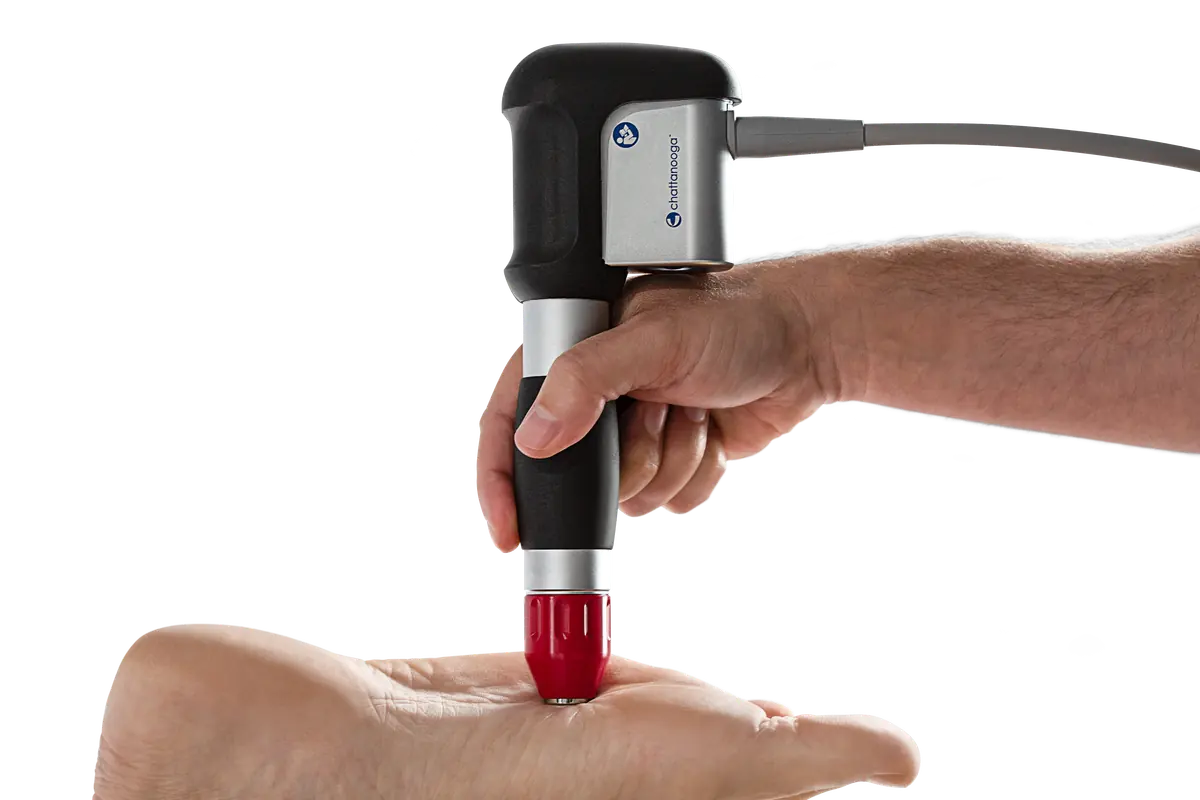
Compare the actual device categories, current labeling, application components, and operating requirements before discussing purchase price.
Review the current focused-device labeling separately from radial equipment.
The right comparison includes target area, depth considerations, patient population, workflow, training, and service.
These questions are written for clinics, rehab directors, chiropractors, sports medicine teams, and purchasing groups evaluating equipment, pricing, training, service, and implementation.
Compare the device category first. Focused shockwave and radial pressure wave differ in equipment design, workflow, target-depth considerations, accessories, and the exact device's intended use.
Focused shockwave buyers should ask about indication-aligned use, treatment target, stand-off options, setup, training, service, and quote details.
Radial pressure wave buyers should ask about handpiece workflow, transmitters, room setup, training, service, accessory replacement, and support.
A clinic can evaluate both categories, but the decision should be based on patient mix, room flow, staff training, budget, and the exact device's intended use.
Pricing depends on device category, configuration, accessories, service, training, and purchase structure. Ask Chattanooga Rehab for a quote after category fit is clear.
Ask to compare setup, applicators, handpiece workflow, treatment-room requirements, staff handoff, support process, and maintenance expectations.
Review provider roles, likely use cases, scheduling, room availability, training time, documentation habits, and service expectations.
Procurement should ask for device category, quote scope, warranty, service path, included accessories, training plan, and support contacts.
Discuss category fit with Chattanooga Rehab, then narrow the conversation to focused shockwave, radial pressure wave, or a phased equipment plan.
1. Chattanooga. Shockwave therapy devices: US indications and device categories. The US indication statement and distinction between focused shockwave and radial pressure wave.
2. Chattanooga. Intelect RPW 2: US product documentation and instructions. RPW device and accessory documentation. Confirm the current instructions for the quoted model.
3. Chattanooga. Intelect Focus Shockwave: US product documentation and instructions. Focused-system documentation and compatible accessories. These are separate from RPW accessories.
Individual results may vary. Neither DJO Global, Inc. nor any of its subsidiaries dispense medical advice. The contents of this website do not constitute medical, legal, or any other type of professional advice. Rather, please consult your healthcare professional for information on the courses of treatment, if any, which may be appropriate for you.
Review the current US instructions for the exact equipment configuration before approving clinical use, accessories, room controls, or staff training. Manufacturer documentation supports product facts; clinical research addresses its stated study population and methods. A study does not extend a device indication. [1]
Intelect Focus Shockwave has a US indication for heel pain due to chronic proximal plantar fasciitis in adults with failed alternative conservative therapies for at least six months. Review radial pressure wave labeling independently; do not transfer a condition claim between systems. [1]