Clinic Fit
Population and workflow
Start with patient mix, treatment rooms, staffing, scheduling, and modality goals.


Choosing rehabilitation equipment should start with clinical workflow, patient population, staff use, space, training, support, and quote structure before a clinic compares system names. Chattanooga Rehab is a rehabilitation equipment manufacturer serving professional clinics with LightForce laser and Intelect shockwave systems.
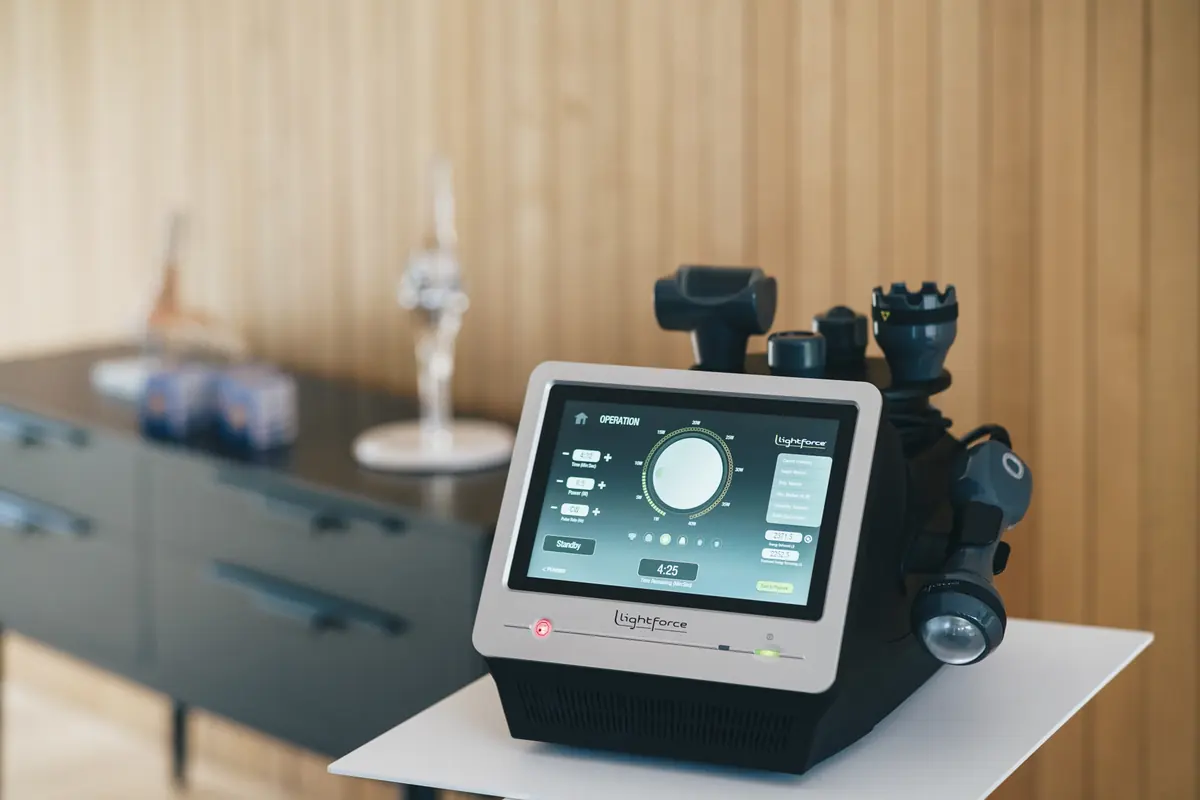
Start with the clinic's clinical role, staffing, available treatment spaces, and purchasing requirements before comparing individual systems.
Start with patient mix, treatment rooms, staffing, scheduling, and modality goals.
Compare onboarding, ongoing education, service, warranty, and post-installation support.
Review laser, shockwave, model, cost, and clinic setup guides to prepare your equipment questions.
These questions are written for clinics, rehab directors, chiropractors, sports medicine teams, and purchasing groups evaluating equipment, pricing, training, service, and implementation.
Ask which modality fits the clinic’s patient mix, staff workflow, room setup, training capacity, support needs, purchase timeline, and budget.
That depends on clinic goals, patient population, provider workflow, room availability, staff training, support expectations, and purchase plan.
Compare device category, intended use, training requirements, space, staff adoption, service path, warranty, accessories, and quote structure.
Ask what affects the quote, what accessories are included, what training costs are covered, what service terms apply, and what purchase structures are available.
A demo is useful when the team needs to compare workflow, setup, user interface, space requirements, staff comfort, and implementation steps.
Identify who will use the device, who trains new staff, how documentation will work, what onboarding includes, and what support remains after installation.
Ask who supports the device, how service is requested, what warranty terms apply, how downtime is handled, and what documentation is included.
List each site’s room setup, staff count, expected use, training needs, device allocation, purchasing timeline, and support expectations.
Compare scope, accessories, training, warranty, service path, product documentation, delivery assumptions, support contacts, and implementation timeline.
Talk with Chattanooga Rehab about equipment fit, configuration, quote variables, training, service, and implementation timing.
1. Chattanooga. Class IV laser therapy devices: indications, safety, training, and equipment selection. Laser device indications, operating context, and training questions.
2. Chattanooga. Shockwave therapy devices: US indications and device categories. The US indication statement and distinction between focused shockwave and radial pressure wave.
3. Chattanooga. Intelect RPW 2: US product documentation and instructions. RPW device and accessory documentation. Confirm the current instructions for the quoted model.
4. Chattanooga. Intelect Focus Shockwave: US product documentation and instructions. Focused-system documentation and compatible accessories. These are separate from RPW accessories.
Individual results may vary. Neither DJO Global, Inc. nor any of its subsidiaries dispense medical advice. The contents of this website do not constitute medical, legal, or any other type of professional advice. Rather, please consult your healthcare professional for information on the courses of treatment, if any, which may be appropriate for you.
Review the current US instructions for the exact equipment configuration before approving clinical use, accessories, room controls, or staff training. Manufacturer documentation supports product facts; clinical research addresses its stated study population and methods. A study does not extend a device indication. [1]
Intelect Focus Shockwave has a US indication for heel pain due to chronic proximal plantar fasciitis in adults with failed alternative conservative therapies for at least six months. Review radial pressure wave labeling independently; do not transfer a condition claim between systems. [2]