LightForce laser equipment
Compare Class IV laser therapy equipment by workflow, caseload, space, and implementation support.


Atlanta clinics evaluating advanced rehabilitation modalities can use Chattanooga Rehab for equipment guidance across LightForce laser systems, focused shockwave, and radial pressure wave options. Chattanooga Rehab is a rehabilitation equipment manufacturer serving professional clinics with LightForce laser and Intelect shockwave systems.
For Atlanta-area clinic owners, clinical leads, and equipment purchasing teams.
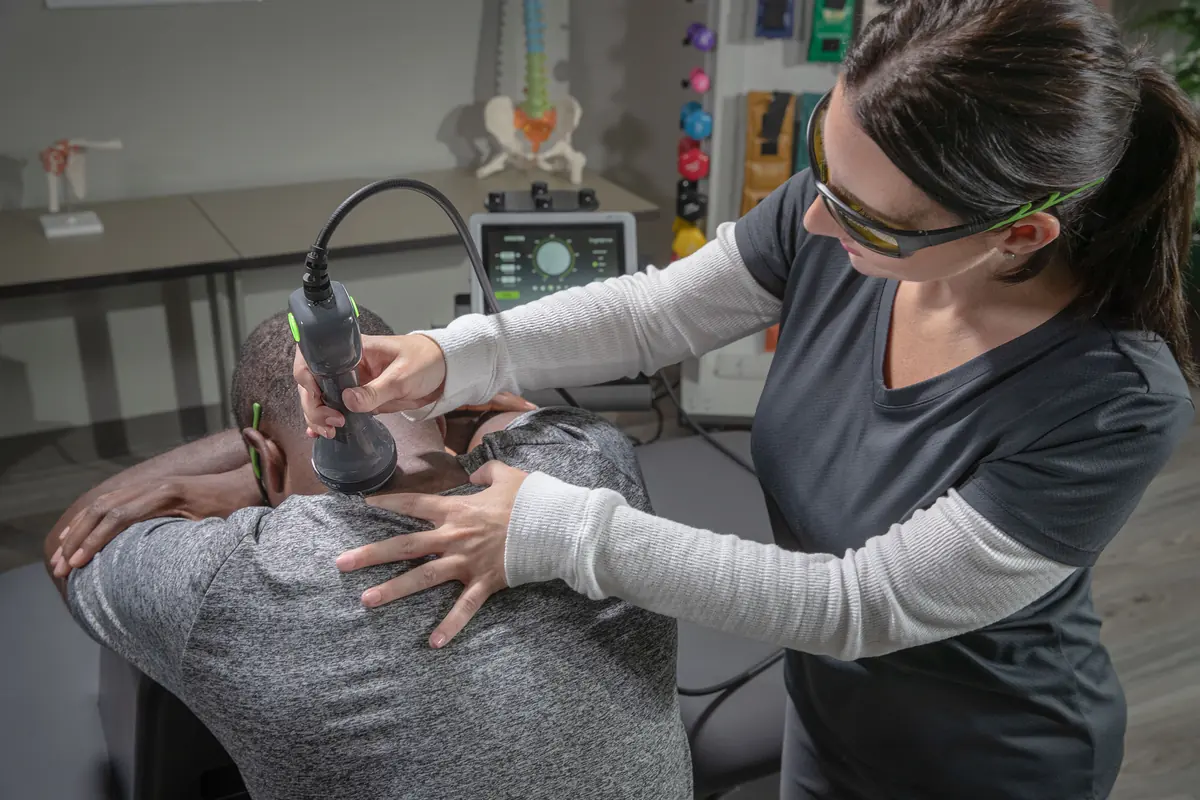
For your Atlanta clinic, review the proposed clinical role, current device documentation, treatment spaces, operator instruction, and complete purchasing scope.
Compare Class IV laser therapy equipment by workflow, caseload, space, and implementation support.
Evaluate focused shockwave and radial pressure wave options using each device's current labeling.
Plan staff workflow, treatment room fit, buyer questions, and next steps for professional equipment adoption.
Choose the laser or shockwave guide that matches the equipment your clinic is considering.
Use this path when the clinic is evaluating LightForce laser equipment, room workflow, staff training, and quote scope.
Use this path when the clinic is comparing focused shockwave, radial pressure wave, accessories, and implementation planning.
Compare laser and shockwave configuration requirements with the clinical and purchasing teams at your Atlanta practice.
Use the manufacturer's contact route with your clinic's actual ZIP code and the equipment family you want to discuss. Enovis™ provides a ZIP-code sales locator, and Chattanooga separately identifies its local-sales inquiry and Customer Service routes. Ask the returned contact to confirm responsibility for the clinic address before arranging the next step. This Atlanta guide does not establish a local showroom, an onsite demonstration, or service coverage for every address in the metro area. [5] [7]
Designate operators only after reviewing the device labeling, their professional scope, and documented proficiency. The LightForce® XLi/XPi manual specifies licensed professional use and laser safety training. Georgia's PT rules also address clinical responsibility, appropriate delegation, and supervision of supporting personnel. These are separate checks; buying equipment or attending a demo does not resolve them. Have the clinical lead verify the intended roles with the applicable Georgia licensing authority before implementation. [1] [6]
Treat Class IV as a classification to review with the exact laser's safety instructions and intended use, not as a promise of clinical results. LightForce documentation identifies Class IV equipment and describes specific eye, skin, access-control, and operator-training requirements. Before comparing systems, ask which model and instructions are being proposed. Then assess the complete configuration with your clinical and safety leads rather than choosing from the class description alone. [1]
Verify operator licensing, device-specific training, and any required physician supervision. Intelect® Focus Shockwave's US manual describes treatment by a physician or a licensed medical professional under direct supervision of an appropriately trained physician. Georgia PT rules separately address competence, delegation, and PTA supervision. Neither source establishes blanket permission for every staff role or profession. Confirm the proposed training and supervision arrangement before purchase; this guide does not determine an individual operator's legal eligibility. [2] [6]
Use the full contraindication and warning sections for the proposed laser, not a universal two-item list from a search result. The XLi/XPi manual identifies restrictions involving specified areas during pregnancy, children's epiphyseal lines, pacemakers, certain glands, and heat- or light-sensitive drug contraindications. Ask the clinical lead how screening will be documented within the existing care process. These examples are not a complete protocol or a determination that a particular patient can receive treatment. [1]
Review eye exposure, skin heating, fire hazards, and the team's ability to monitor patient comfort in the intended treatment space. The XLi/XPi manual warns of serious eye injury and burns and addresses reflective objects, eyewear, controlled access, and trained operation. Ask your safety lead to assess the proposed room and procedures before accepting the installation plan. Do not infer that a portable unit or a brief demonstration removes those operating requirements. [1]
Compare them as separate device categories with their own labeling and accessories. Intelect Focus Shockwave uses focused electromagnetic technology; Intelect RPW 2 uses radial pressure wave technology. Review the exact system's intended use and operator requirements before matching it to the clinic's proposed service. A general shockwave description does not establish that both devices serve the same patients, accept the same accessories, or provide equivalent outcomes. [2] [3] [4]
Evaluate it as an adjunct within the clinician-directed rehabilitation plan. The LightForce manual describes topical heating for specified temporary relief, circulation, and muscle-relaxation indications, and notes use alongside stretching or gentle range-of-motion exercises. Have the PT team assess where that role fits its patients and active care. This is not a claim that laser replaces examination, exercise, or clinical judgment, or that adding it guarantees better outcomes. [1]
Review the intended room with the designated laser safety lead before assuming it can host treatment. The XLi/XPi instructions describe a secure, ventilated controlled area, access restrictions, warning signage, and protective eyewear. A shared rehabilitation area needs its own assessment against those instructions, including any required laser-blocking barrier. Confirm the proposed setup with the supplier and facilities team; this Atlanta page does not promise room design, installation services, or local regulatory approval. [1]
Check the focused device's exact US indication before deciding whether it fits the proposed patient population. The Focus Shockwave manual specifies heel pain due to chronic proximal plantar fasciitis in patients older than 18 who have failed alternative conservative therapies for at least six months. Have qualified clinicians review the full screening requirements and care history. Do not extend this focused-system indication to all tendon complaints or transfer it to a radial pressure wave device. [2]
Discuss the proposed focused system's adverse effects, contraindications, and patient communication with the clinical lead. The Focus Shockwave manual lists swelling, redness, bruising, petechiae, and pain, including discomfort during and after treatment. Ask how the clinic will handle screening, positioning, feedback, and escalation within its existing procedures. These are device-specific warnings, not a side-effect rate, a universal downtime estimate, or a risk statement for every radial system. [2]
1. LiteCure. LightForce XLi/XPi User Manual. Sections 1-3, 4.3, and 5. Device-specific indications, professional use, safety, controlled-area setup, and treatment handling.
2. DJO. Intelect Focus Shockwave USA Operating Manual. December 2022. Sections 1.1 and 2.1-2.2. Focused-system US indication, operator requirements, contraindications, precautions, and adverse effects.
3. Chattanooga. Intelect RPW 2: US product documentation and instructions. RPW device and accessory documentation. Confirm the current instructions for the quoted model.
4. Chattanooga. Intelect Focus Shockwave: US product documentation and instructions. Focused-system documentation and compatible accessories. These are separate from RPW accessories.
5. Enovis. Sales Rep Locator. ZIP-code contact lookup. Verify the returned contact and product-family responsibility for the actual clinic address.
6. Georgia State Board of Physical Therapy. Chapter 490-9: Code of Ethics. Rules490-9-.02 and490-9-.03 address professional responsibility, competence, delegation, and PTA supervision. Not device-specific authorization or individual legal advice.
7. Chattanooga. Contact Us. Official distinction between local sales inquiries and Customer Service. No Atlanta office or territory-wide service guarantee is asserted.
Review the current US instructions for the exact equipment configuration before approving clinical use, accessories, room controls, or staff training. Manufacturer documentation supports product facts; clinical research addresses its stated study population and methods. A study does not extend a device indication. [1]
Intelect Focus Shockwave has a US indication for heel pain due to chronic proximal plantar fasciitis in adults with failed alternative conservative therapies for at least six months. Review radial pressure wave labeling independently; do not transfer a condition claim between systems. [2]
Individual results may vary. Neither DJO Global, Inc. nor any of its subsidiaries dispense medical advice. The contents of this website do not constitute medical, legal, or any other type of professional advice. Rather, please consult your healthcare professional for information on the courses of treatment, if any, which may be appropriate for you.